Get in Touch with Teng Yang Company


Hot Melt Adhesive Manufacturer — TPU, EVA, PA, PES & PO
Shanghai Tengyang New Materials Technology Co., Ltd. is a hot melt adhesive manufacturer based in Shanghai, China. We formulate five polymer chemistries in four delivery forms under one ISO 9001 quality system, bonding textile, garment, seam-free underwear, footwear, leather, automotive interior, heat-transfer printing, reflective material and packaging substrates.
Available Forms: Film, Web, Powder & Granules
Scope note: we make hot melt adhesive in the forms that go into a bonded product, film, web, powder and granules for lamination lines. We aren't a craft glue-stick brand and we don't sell glue guns.


5
polymer chemistries
TPU · EVA · PA · PES · PO
4
delivery forms
film · web · powder · granules
85–260 °C
application temperature
span across grades
OEM
thickness · width · melt point
colour · viscosity band
ISO 9001
quality management
system
Samples
before you commit
to volume
The Single-Chemistry Trap Why One Bonded Product Ends Up With Two Adhesive Suppliers
Most hot melt adhesive makers run one polymer family well. A garment line that needs polyamide (PA) at 140–260 °C for a heat-resistant bond and ethylene-vinyl acetate (EVA) at 90–180 °C for packaging ends up with two vendors, two minimum order quantities and two sets of batch documents. The root cause isn't price, it's that each supplier's production is built around a single base polymer.
What the trap actually costs you
01
Every chemistry carries its own process window, which is why formulators publish blends aimed at specific ones — see WO2017123874A1, a hot melt composition built for processability below 160 °C.
02
Two suppliers, two minimums: inventory you never wanted, on order one.
03
Trading-company drift: you get whichever grade is in stock that week, so viscosity and softening point move from bag to bag with no document explaining why.
04
Split accountability: when a bond fails in production, each vendor points at the other one's material.
05
Unit price is the wrong lens. Contrary to the way most quotes get compared, a supplier at $85 per unit with 8% defects costs $104.60 in real terms, while a $92 supplier at 1% defects costs only $103.20.
| Sourcing route | Suppliers to manage | Grade traceability | Formulation tunable? |
|---|---|---|---|
| Single-chemistry maker | 2+ per product | Per vendor, not comparable | Within one family only |
| Trading company | 1 (but opaque) | Weak — stock-driven | No |
| Integrated factory (Tengyang) | 1 | One ISO 9001 record set | Across all five chemistries |
Our Hot Melt Adhesive
Product Range
Engineered formulations. Precision manufacturing.
Uncompromising adhesion.

TPU Film
Thermoplastic polyurethane (TPU) film for technical joining and lamination - elasticity, resistance to abrasion, weldable at heat.
View TPU film →
Hot Melt Adhesive Film
Solid in all five chemistries. Tack free at room temperature, not like a pressure sensitive adhesive, it only bites when heat is applied.
View hot melt adhesive film →
Hot Melt Adhesive Web
Non-woven web that handles like a fabric. Suits open bonding structures where the laminate must stay breathable and soft.
View hot melt adhesive web →
Hot Melt Adhesive Pellets & Granules
Thermoplastic feedstock for tank and nozzle equipment and extruders, and re-extruded by the raw material converters into their own film or web.
View hot melt adhesive pellets & granules →
Hot Melt Adhesive Powder
Scatter-coating powder for textile faces and irregular substrates, in polyamide (PA), ethylene-vinyl acetate (EVA), polyester (PES) and thermoplastic polyurethane (TPU).
View hot melt adhesive powder →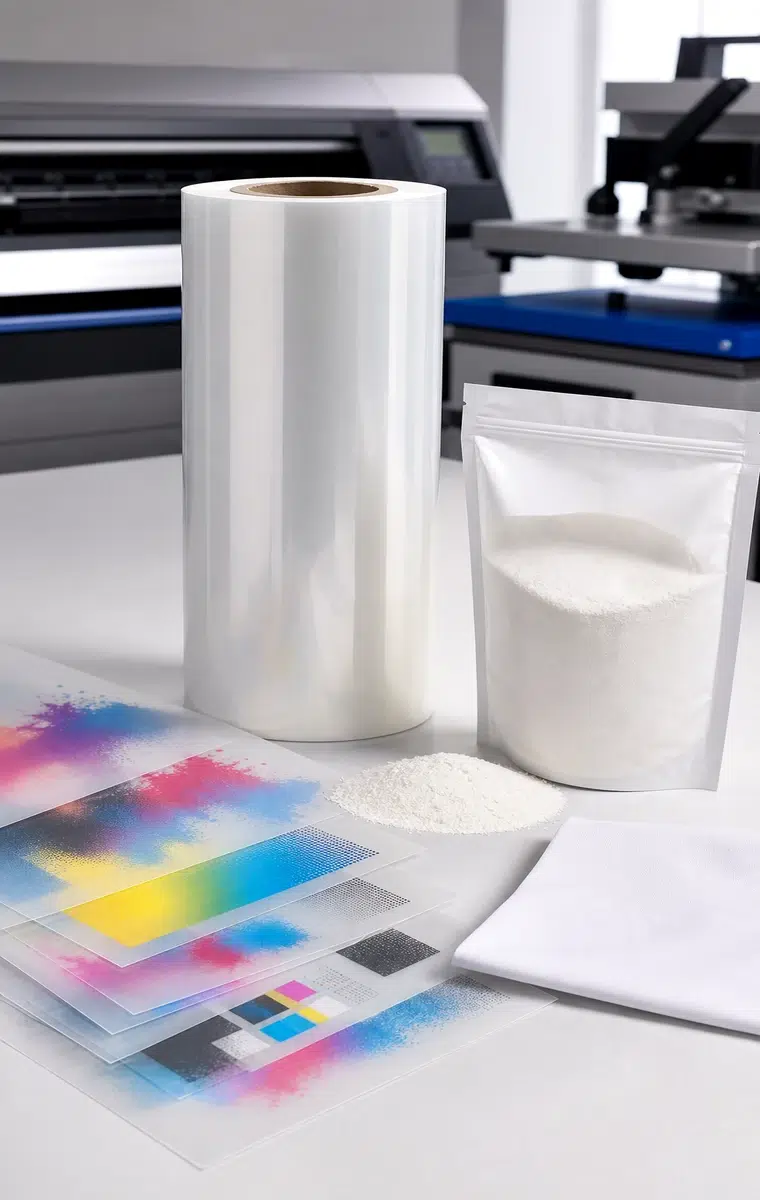
DTF Transfer Materials
Direct-to-film transfer materials for heat-transfer printing, supplied wholesale and OEM rather than by the retail sheet.
View DTF transfer materials →| Base polymer | Association-published role | Where we run it |
|---|---|---|
| Ethylene-vinyl acetate (EVA) | "Base polymer frequently used for standard applications" | Film · powder · granules |
| Polyolefin (PO) | "Permitted for higher thermal stability" | Film · granules |
| Polyamide (PA) | "Higher thermal stability" | Film · web · powder · granules |
| Polyester (PES) | "Improved adhesion spectrum and long open time" | Film · web · powder · granules |
| Polyurethane (TPU) | Polyurethane is the "most reactive system with high thermal stability and moisture resistance" | Film · powder · granules |
Form Before Chemistry, Which Hot Melt Adhesive Form Your Bonding Job Needs
"The impact that the adhesive has on test results is considerably lower than generally assumed. Instead, the processing method used is especially decisive for the adhesive bond, just like the stability of coating materials and substrates."
That's a counter-intuitive thing for an adhesives trade association to publish, and it reorders the whole decision. The common assumption, that choosing the right glue is what makes the bond work, is the mistake we watch buyers repeat.
| Form | How it is applied | Typical line | Choose it when |
|---|---|---|---|
| hot melt adhesive film | Laid in, then heat + pressure | Heat press, roll-to-roll laminator | You need repeatable, controlled bond-line thickness across a whole panel |
| hot melt adhesive web | Laid in, then heat + pressure | Heat press | The bond must breathe and keep soft hand-feel between fabric plies |
| hot melt adhesive powder | Scatter-coated, then oven | Powder scatter coater | The substrate is irregular, or you need a fine even coat across a textile face |
| hot melt adhesive pellets & granules | Re-melted and dispensed or extruded | Tank-and-nozzle unit, extruder | You dispense continuously — or you convert granules into your own film or web |
If you get the form wrong, the price of having it corrected will typically involve replacing equipment rather than reordering, and that's a structural risk, not a supplier failing. Tengyang engineers can also recommend a form.
Send your two substrates and line temp for a form recommendation →
An EVA hot melt isn't always the cheap option. Ethylene-vinyl acetate is easy to apply and fast, but its heat resistance in service is lower than polyamide or polyolefin, so on a part that gets hot after it ships, the cheaper adhesive is the one that costs more. Adhesive strength at 20 °C tells you very little about bonding and sealing performance at 90 °C.
Hot Melt Adhesive vs Other Adhesive Systems
Choosing between types of adhesives is a process decision before it's a chemistry decision. Honest summary: hot melt wins on speed and on costs and energy consumption, and loses to solvent-based systems on sustained chemical and heat exposure. That trade-off is real, and we would rather name it than lose a customer to a failed joint six months in.
Solvent routes carry a compliance load hot melt does not: OSHA 29 CFR 1910.1200 hazard communication applies to the volatile organic compounds they release.
Types of hot melt adhesives split three ways: thermoplastic (ours), polyurethane hot melt reactive systems, and pressure-sensitive grades.
Range of applications for our four forms run from seam-free underwear to automotive interior trim, the constraint is the process window, not the industry label.
Packaging applications are the one place where our granules and the dispensed half of the category meet.
VS
Other Adhesives
Tengyang Hot Melt
| Adhesive system | Set / cure | Solvent & VOC handling | Best where |
|---|---|---|---|
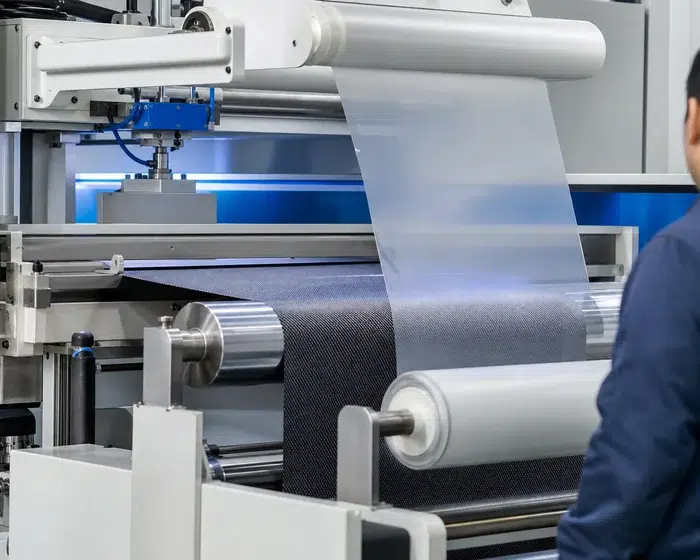
| Hot melt adhesive (100% solids) | Seconds, thermal — short curing time | None — no solvent | High-speed lamination and product assembly |
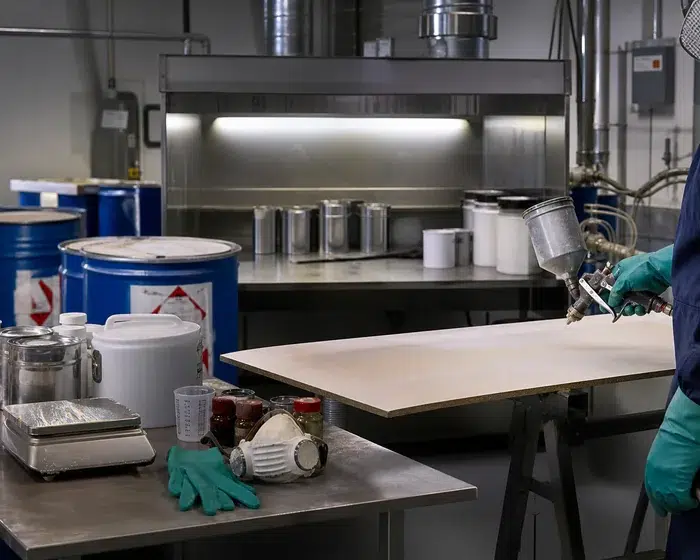
| Solvent-based adhesives | Minutes to hours, evaporative | Ventilation / volatile organic compounds abatement | Sustained chemical, heat and moisture exposure |
| Water-based adhesives | Drying tunnel required | Low VOC, but water must leave | Porous substrates, cost-driven volume |
| Pressure-sensitive adhesives | None — tacky at 20 °C | Varies by carrier | Adhesive tape, labels, repositionable bonds |
| Rubber-based adhesives / cyanoacrylate adhesive | Contact / rapid cure | Varies | Spot bonding, small-area assembly |
Thermoplastic or reactive, the split that decides reworkability
Don't assume hot melt replaces every industrial adhesive. If your joint must survive solvents and sustained heat for years, a solvent-based or reactive product may genuinely be the right call, and we would rather say so than sell you the wrong adhesive bonding route.
Talk to us about whether hot melt is even the right system for your part →❮
❯


What a Hot Melt Adhesive Quote Actually Needs
"I need 0.1 mm film" isn't yet a specification, and quoting against it is how a first order goes wrong. One adhesive behaves three different ways once you add a substrate, a wash cycle or a dwell time, the reason is that a bond is a system, not a material.
Even a granted composition is defined by process variables rather than a single number — US9359534B2 specifies its polyolefin by softening point and substrate surface energy. Ask whether our adhesive is heat-resistant and the honest answer is: tell us the substrate and the process, and we'll tell you whether the bond will be.
It's also why bonds fail for reasons that have nothing to do with the glue: "the most common root cause of adhesive failure is surface contamination that prevents the adhesive from wetting and bonding to the substrate."
"'Thermal stability' and 'water resistance' are typical characteristics of a bond and not of the adhesive by itself. That should be taken into account when considering the requirements and their parameters."Industrieverband Klebstoffe e.V., TKH Technical Briefing Note 4, §3.1
| Form | Specify | Units | Quoted by |
|---|---|---|---|
| Film | thickness · width · melt point · colour | µm · mm · °C | m² or roll |
| Web | weight · width · melt point | gsm · mm · °C | m² or roll |
| Powder | particle size · chemistry · melt point | µm · — · °C | kg |
| Granules | chemistry · melt point · viscosity band | — · °C · cps | kg |
Process Variables Required
01
Both substrates
what's bonding to what, including any coating or finish.
02
The line
heat press, roll laminator, scatter coater or tank-and-nozzle, with its temperature window inside the 85–260 °C span.
03
Service conditions
wash cycles, dry cleaning, UV exposure, service temperature.
04
Volume & format
trial quantity first, then the production run.
05
Coating weight
too low gives a weak bond, too high causes curing problems, an inconsistency that shows up in the laminate.
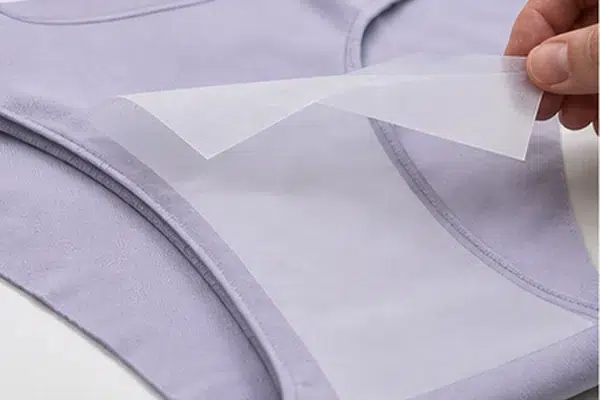
Garment & Underwear
Film and web replace stitching for a flat, invisible bond that keeps hand-feel. Unlike a sewn seam, the bond line has no needle holes to fail along.
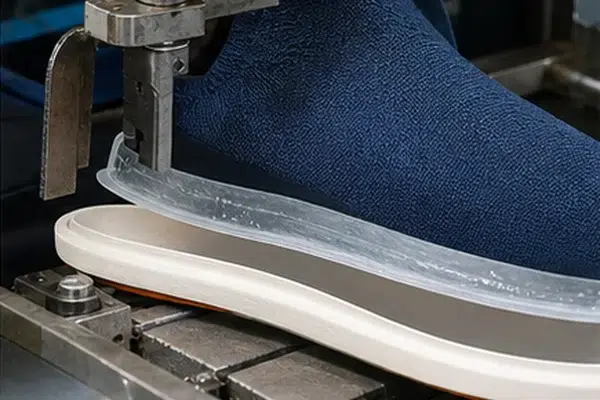
Footwear Assembly
Film and powder for uppers, soles and reinforcement layers, in an OEM assembly context. Sole bonding by film is documented in CN103756580A.
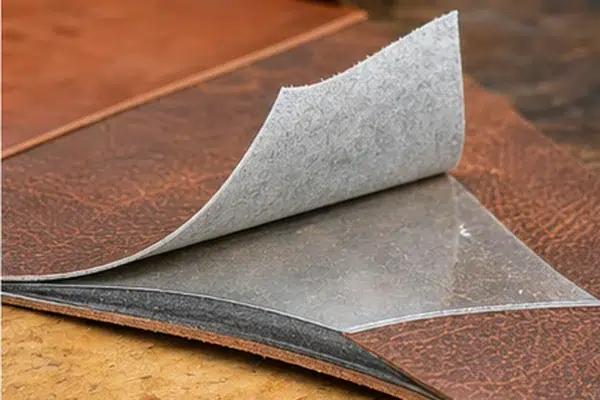
Leather Lamination
High-performance film and web components structured accurately across grain and backing layers for lasting durability.
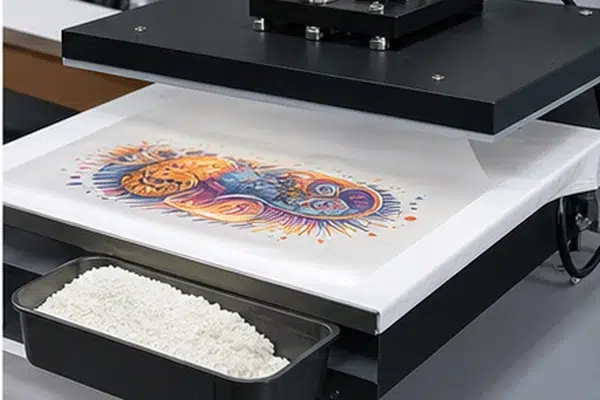
Heat-Transfer & DTF
Premium transfer materials and powder tailored specifically for the rigorous demands of the print-to-fabric chain.
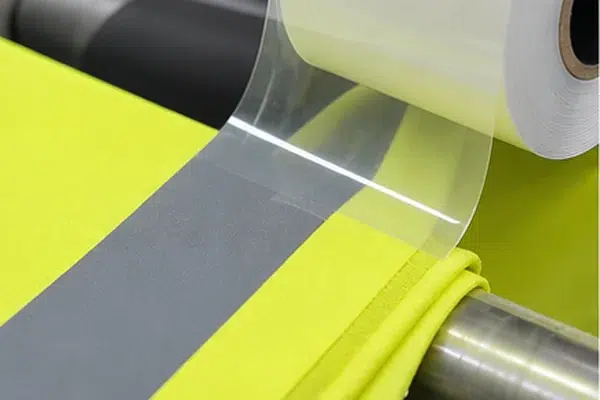
Reflective Materials
High-performance carrier and bonding film engineered for stability in high-visibility construction and safety gear.
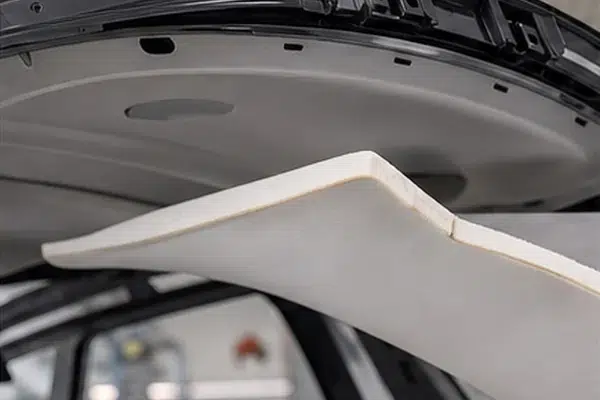
Automotive Interior
Film and granules for trim, headliner and acoustic lamination, where polyamide and polyolefin hold 140–260 °C service windows.
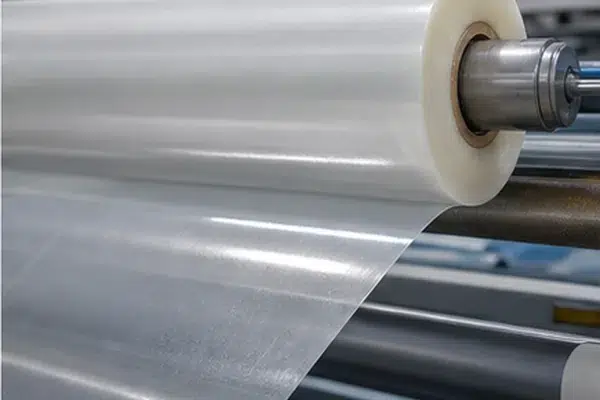
Industrial Packaging
Granules for dispensing lines. Our film and web sit seamlessly inside laminated structures for robust protection rather than just closing boxes.
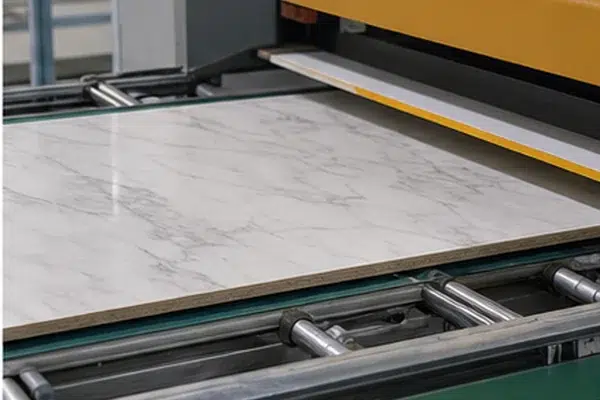
Building Decoration
Specialized panel and composite lamination solutions providing superior structural integrity across industrial applications.
Industries We
Serve
Each industry maps to a form first, then a chemistry, and the risk of getting that order wrong is a re-tooled production line, not a re-order.
Tengyang provides the same five chemistries into every one of these applications from one ISO 9001 factory, preventing spec drift.
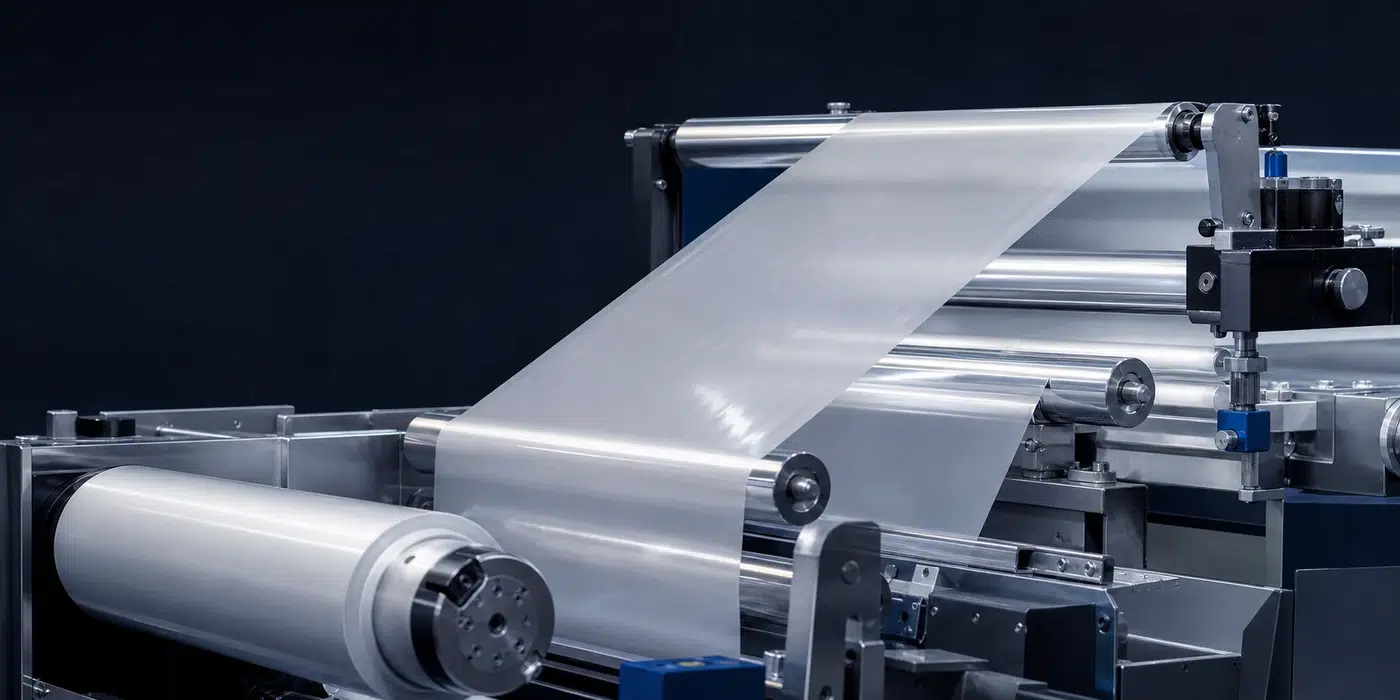
Quality, Certifications & Compliance
How a bond is actually tested
Softening pointring-and-ball method, ASTM E28.
ViscosityBrookfield, ASTM D3236, reported at 190 °C for most grades.
Peel resistancefloating roller method, DIN EN 1464.
Alternating climateDIN 50016 / 50017.


INTELLIGENT PRODUCTION MATRIX
Explore our state-of-the-art manufacturing facilities. Navigate through automated production lines and precision quality control centers.
HUD Filter:
Auto-play
×
Sourcing, MOQ, Lead Time, Samples & OEM
The expensive mistake in this category isn't the unit price, it's the gap between the approved sample and the production batch, because that inconsistency only shows up once your line is already running.
OEM
What drives your quoted price
- Chemistry and form · volume · custom colour, melt point or viscosity band · certification package · shipping terms.
- OEM: custom formulation, thickness, width, melt point and colour under your own brand.
- MOQ and lead time vary by chemistry and by how much customisation you need. Send a target volume and we'll give you a number instead of a range.
De-risking a first order
- Samples first: validate bond, hand-feel and spec before any volume commitment.
- Test on your own substrates, not on the ones from the datasheet.
- Ask for more than one batch. As one sourcing guide put it: "If the factory provides samples from a single batch, they are hiding their production variation." Test each sample against your own KPIs.
- Run a paid pilot at line speed before the main purchase order, asking for the technical data sheet and the OSHA-compliant safety data sheet with it — a trial run is cheaper for both sides than a post-production dispute.
Tengyang delivers the production run against the qualified sample and keeps the batch record that proves it, because ISO 9001 traceability is the only honest answer to "is it the same glue?".
High-Performance Hot Melt Adhesive Films (PET & TPU)
PET Film Applications


TPU Film Applications


Hot Melt Adhesive Engineering & Evaluation Tools
Hot Melt Adhesive Form Selector
Answer three questions about your line. The tool names the form and sends you to the right product page. It does not quote a price — that needs your substrates.
Hot Melt Adhesive Quote Readiness Checklist
Tick what you already know. The tool tells you whether we can quote a real number or only a range — and what is missing.
Hot Melt Adhesive Base Polymer Comparator
Compare the five base polymers we run. Role descriptions are quoted from a neutral trade association, not written by our marketing team.
FAQ
Frequently Asked Questions
HMA_DATA_LINK
> SYSTEM IDLE.
AWAITING QUERY SELECTION...
AWAITING QUERY SELECTION...
[01]
Which hot melt adhesive form do I need, film, web, powder or granules?
Decide by process, not by chemistry. Film gives controlled bond-line thickness on a press or laminator, web keeps a laminate breathable and soft, powder scatter-coats irregular or textile faces, and granules feed a tank-and-nozzle unit or an extruder at 90–180 °C.
[02]
Is hot melt adhesive the same as the hot glue from a glue gun?
Same polymer family, different product. One buyer described the problem exactly: "I tried searching for 'hot melt glue for fabric' but I just get the generic 'art and craft' glue sticks that are designed for sticking paper and fabric to wood." What Tengyang makes is industrial hot melt adhesive supplied as film, web, powder or granules for production lamination. If you want craft glue sticks, we aren't your supplier.
[03]
Which chemistry fits my substrate, TPU, EVA, PA, PES or PO?
Start from service conditions and line temperature, anywhere in the 85–260 °C span. Ethylene-vinyl acetate (EVA) covers standard work, polyamide (PA) and polyolefin (PO) buy thermal stability, polyester (PES) gives a longer open time, and thermoplastic polyurethane (TPU) brings elasticity with moisture resistance.
[04]
Can you make a custom formulation, and what can you tune?
Yes, thickness, width, melt point, colour and viscosity band, across all five chemistries. Send the application rather than a part number and Tengyang engineers will formulate to the process. Request a custom spec →
[05]
Do you supply hot melt adhesive for carton sealing and packaging lines?
For packaging lines that dispense, yes, our granules feed tank-and-nozzle equipment. Case and carton sealing is dispensed-adhesive territory; our film and web are for the laminated structure, not for closing the box.
[06]
How is your film different from a pressure sensitive adhesive?
A pressure sensitive adhesive is tacky at 20 °C and grips under finger pressure. Unlike that, our hot melt adhesive film is dry to the touch until heat and pressure activate it, which is what lets you place it precisely and cut it before anything bonds.
[07]
What is your MOQ, and can I get samples first?
MOQ depends on chemistry and customisation level, so Tengyang quotes it against your actual spec rather than publishing a number that would be wrong for most buyers. Samples come first either way, we would rather you qualify the bond on your own substrate before committing to volume. Request a sample and an MOQ for your spec →


